Cloisonné glass
An investigation into decorative cloisonné glass and it's history in Waterloo Region.
Jun 24

An investigation into decorative cloisonné glass and it's history in Waterloo Region.
While the majority of municipally listed and designated properties in Waterloo feature residential buildings, our city has fine examples of commercial buildings as well, many of which are located on King Street. In her book Waterloo Township through Two Centuries, Elizabeth Bloomfield noted King Street was the “axis of early settlement and economic activity”. Linking John Erb’s mills in Preston to Abraham Erb’s mills in Waterloo, King had been known as the Great Road and is now part of the commercial core in Uptown Waterloo. Read more
Inspired by the City of Waterloo Museum’s fantastic exhibit on our different residential architectural styles in Waterloo, this next Foundations post will examine our very own vernacular architecture. But first, what does “vernacular” mean? Read more
The City of Waterloo Museum’s current exhibit, At Home: Residential Architecture in Waterloo, highlights the neighbourhoods and architectural styles that are found in our city. Featured styles include Victory housing, Edwardian, Colonial Revival and Mid-Century Modern. Visitors to the Museum can interact with “please touch” materials that have been used in the construction of residential dwellings over time.
Reflections about Waterloo's century old tradition of brewing (and quaffing). Part one of a two part series on Waterloo's ever changing local brewing industry.
An short history of the Seagram Lofts and how they came to form a focal point at the end of Willis Way in Uptown Waterloo
Contemporary heritage: Five years after its construction, the University of Waterloo's intriguing nano-technology building continues to both inspire and reflect the cutting edge research within.
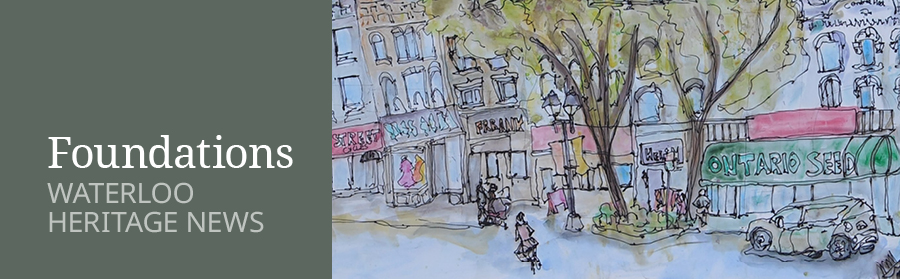
Michele Braniff, Waterloo's artist in residence in 2016, captures the chaotic beauty of historic places, locally and worldwide. Read about her artwork and what inspires her.
The first in a series about contemporary heritage: Take a tour of the CIGI building at 67 Erb Street West to learn why we think it deserves special recognition for both its architectural design and its sensitivity to its historic setting.
A retrospective look at the corner of King and Erb, one of the City’s most photographed intersections. Our journey starts in the 1850s when King Street was known as “the Great Road”, Erb Street was called “Erb’s Road”, and both were little more than dirt tracks carved out of the landscape.


