
A History of Cinema in Waterloo
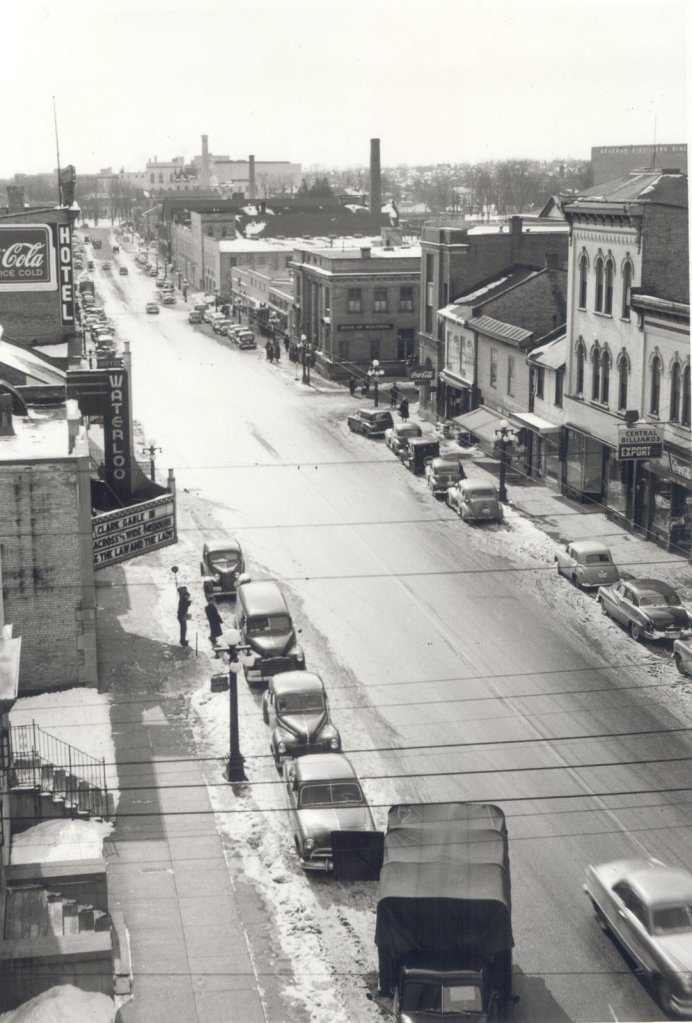
Who doesn’t like going to the movies? As the City of Waterloo has recently designated the Waterloo Theatre at 16-24 King Street North as a heritage building, I thought it might be interesting to look back to the beginning of movie-going experiences in our community.
A very brief history of moving pictures
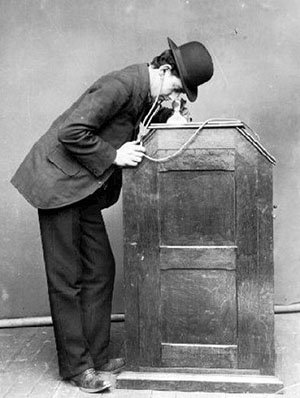
A bit of historical context about moving pictures. In 1891 the Edison Company invented the Kineoscope, a device that let one person at a time view moving pictures, essentially looking through a specially designed tube into a box. The first public Kinetoscope demonstration took place in 1893 and by 1894 the Kinetoscope was a commercial success, with public parlours set up with viewing equipment for paying customers.
The first moving pictures projected on a screen to a group of people were shown in December 1895 in Paris, France. Invented by the Lumière brothers, the Cinématographe was a camera, a projector and a film printer all in one.
Louis Minier and Louis Pupier showed the first films in Canada using a cinematograph in Saint-Laurent, Quebec, on 27 June 1896. Films were shown across Canada in Ottawa and Winnipeg throughout the summer of 1896. At first, moving pictures were very short, sometimes only a few minutes or less. They were shown at fairgrounds, music halls, or anywhere a screen could be set up and a room darkened. Subjects included local scenes and activities, views of foreign lands, short comedies and newsworthy events. The films were accompanied by lectures, music and a lot of audience participation.
The movies come to Waterloo
Theatres with the sole purpose of showing films to the public began to open across the country at the beginning of the 20th century. The first cinema in Waterloo likely dates to 1910. According to Ellis Little, space was rented in Charles Fischer’s shop at 50 King Street South where silent films could be watched for five cents.
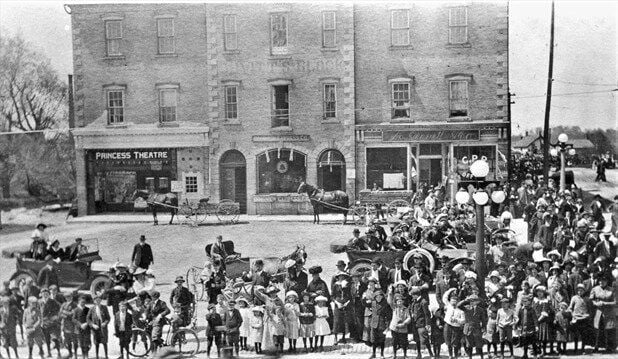
In 1913, the Princess Theatre opened on southwest corner of King Street South and Erb Street West in the Snider-Devitt Block. Set back from the southwest corner of King and Erb, the 1870s building underwent $4,500 in renovations. The Princess was Waterloo’s first street-level movie house, and it opened just before Christmas 1913. Berlin artist Reuben Jukes was hired to decorate the lobby. The theatre closed in 1921 after admission increased from 10¢ to 25¢.
For more than a decade, Waterloo theatre patrons travelled to Kitchener to see shows at The Lyric and the Capitol. It wasn’t until 1936 that the Waterloo Chronicle reported that the Famous Players Canadian Corporation and the Premier Operating Corporation were partnering as the Theatre Holding Corporation of Toronto to erect a $65,000 theatre in Waterloo.
Independent and local
The Theatre Holding Corporation hired American theatre architect Henry George Duerr (1891-1966), to design a 650-seat theatre. Demolition of the earlier commercial buildings at 16-24 King Street North occurred in late 1936. Work on the theatre progressed rapidly and by Christmas 1936, the masonry work was completed, followed by the roof in January 1937. In early February, a neon sign reading “The Waterloo” was erected over the canopy entrance. By the early 1930s, nearly all feature-length movies were presented with synchronised sound, and, by the mid-1930s, some were in full colour too. The interior featured a state-of- the-art sound system installed by the Dominion Sound Equipment Company of Toronto. At the time, only three other theatres in Canada had this system. Seats were made locally by Waterloo’s Globe Furniture company.
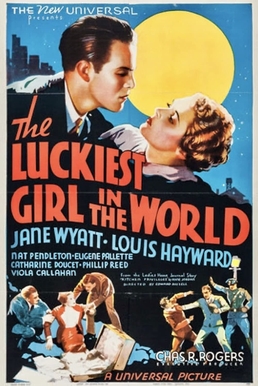
The Waterloo Theatre officially opened to a sold-out crowd on March 12, 1937 showing Jane Wyatt in “The Luckiest Girl in the World” & Alice Faye in “Sing, Baby, Sing”. The Daily Record called the 120-by-50-foot auditorium “a triumph of modern architectural design and workmanship.”
In the 1980s, other cinemas began to pop up in Waterloo. The Princess Cinema (no relation to the 1913 version), an independent single screen cinema, opened just around the corner from the Waterloo Theatre in 1985 on Princess Street West, behind the Huether Hotel.
The Waterloo Theatre operated until January 30, 1997, eventually under the ownership of Cineplex Odeon Theatres. The last movie to hit the screen was “The People vs. Larry Flint” starring Woody Harrelson. In February 1997, the space was converted into Waterloo Stage Theatre by Steve Roth, an administrator for the School for the Performing and Visual Arts at The Centre in the Square. Theatrical productions began in May of that year. To accommodate a stage extension and lounge area, seating was reduced to 250 seats. The building operated as a live theatre space until 2014, when the building became a nightclub.
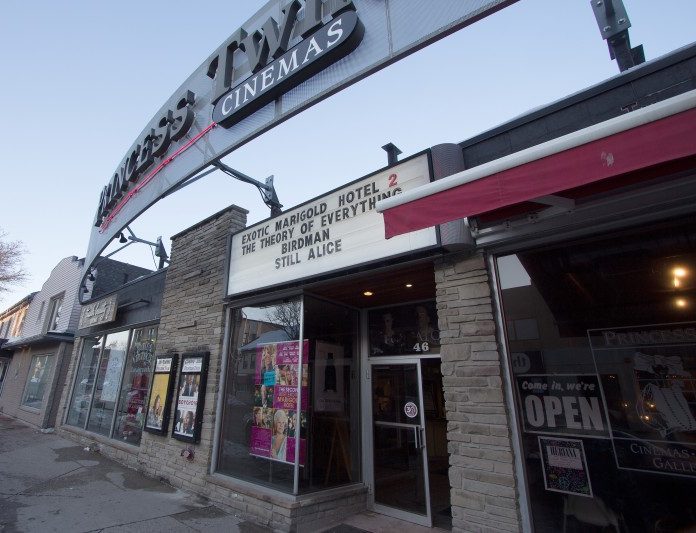
In 2003, the owners of the Princess Cinema purchased the Alan Rigby House of Furniture at 46 King Street North, and over the course of two years, converted the two-storey retail space to a twin cinema with stadium seating. The Princess Twin cinemas started screening movies in January 2005.
Multiplexes and corporations
Meanwhile, multiplex chain movie theatres had arrived in neighbouring Kitchener in the late 1990s with the construction of a new Silver City by Cineplex Odeon in 1998. With 12 screens, cinema patrons had a wide variety of shows to choose from. This property was sold to Empire Theatres in 2005. Moving locations from Fairway Drive to Gateway Drive in 2013 when Landmark Cinemas acquired Empire, the theatre remained open until 2023.
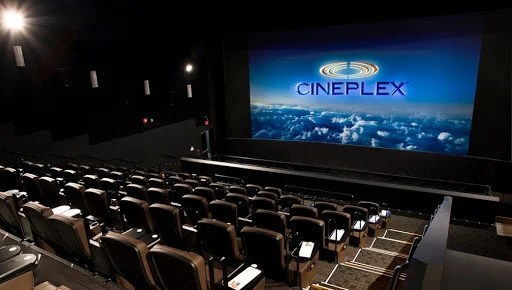
Cineplex maintained a foothold in Waterloo by constructing the Galaxy Cinemas Waterloo in the parking lot at Conestoga Mall in 2000. With 10 screens, it was Waterloo’s first multiplex theatre and is still operating.
Landmark opened a new theater in 2023 on The Boardwalk (Ira Needles Boulevard) Waterloo. The newest cinema in Waterloo introduced heated recliners, laser projection, and IMAX screens to the west end of the city.
You choose
Today there is a multitude of choices if you want to go out to the movies in Waterloo. You can check out a foreign language film or art house piece at the Princess Cinemas. Smaller independent theatres have tended to stay near historic downtowns (or uptowns) and show a wider range of films than the current offerings of blockbusters. But if you want the excitement of the massive screens and state of the art sound systems watching the latest action movie, it’s just on the other side of the city.


